- Kombucha brewers need plain, unflavored, clean green tea in a cut that infuses evenly and strains easily, bought in steady volume.
- Flavored or oil-scented teas can interfere with fermentation and cause off-flavors, so ask for leaf with no added flavor.
- Grade matters less than consistency. Pick a mid-range cut, lock the spec and ask for the same lot profile every time.
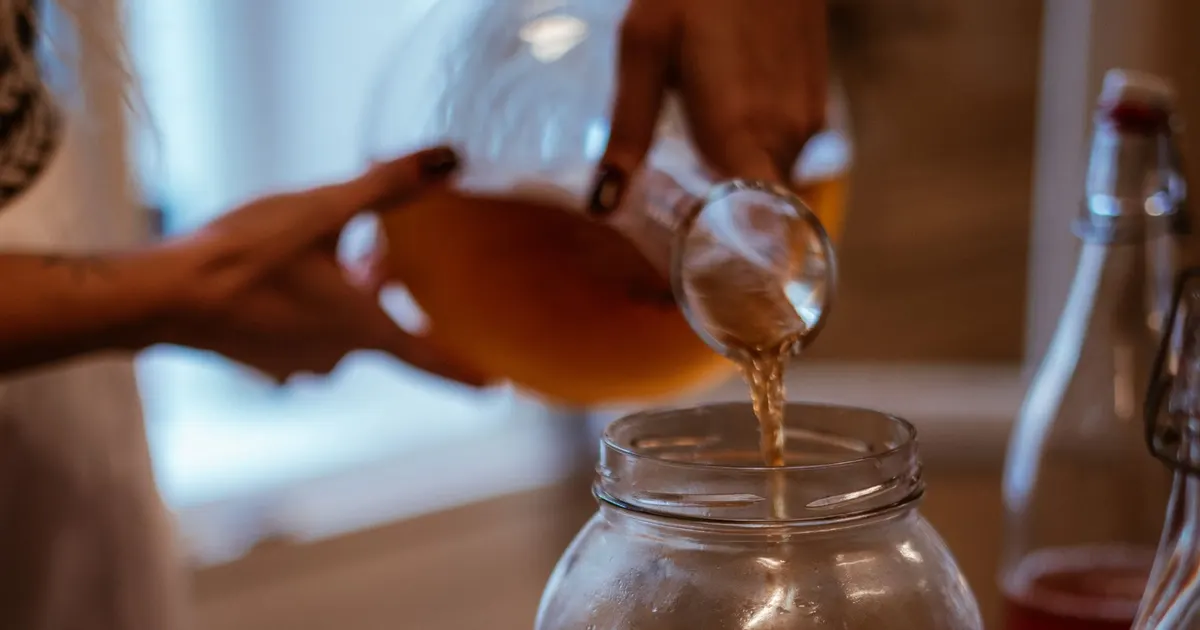
Kombucha is a fermented tea drink, and the tea is its raw material in the same way that grapes are the raw material of wine. A brewer who buys tea by price alone can find that a cheap lot gives haze, bitterness or a slow ferment. A brewer who buys by a clear spec gets a drink that tastes the same from batch to batch. Green tea has become a popular base because it gives a light, fresh and slightly vegetal drink, and Vietnam supplies a lot of it.
This guide is for commercial brewers and brands. It covers what kind of green tea suits kombucha, what to avoid, how to plan volume and how to compare quotes. It does not give fermentation recipes or food safety advice, since those depend on your process and your local rules.
How tea is used in a kombucha batch
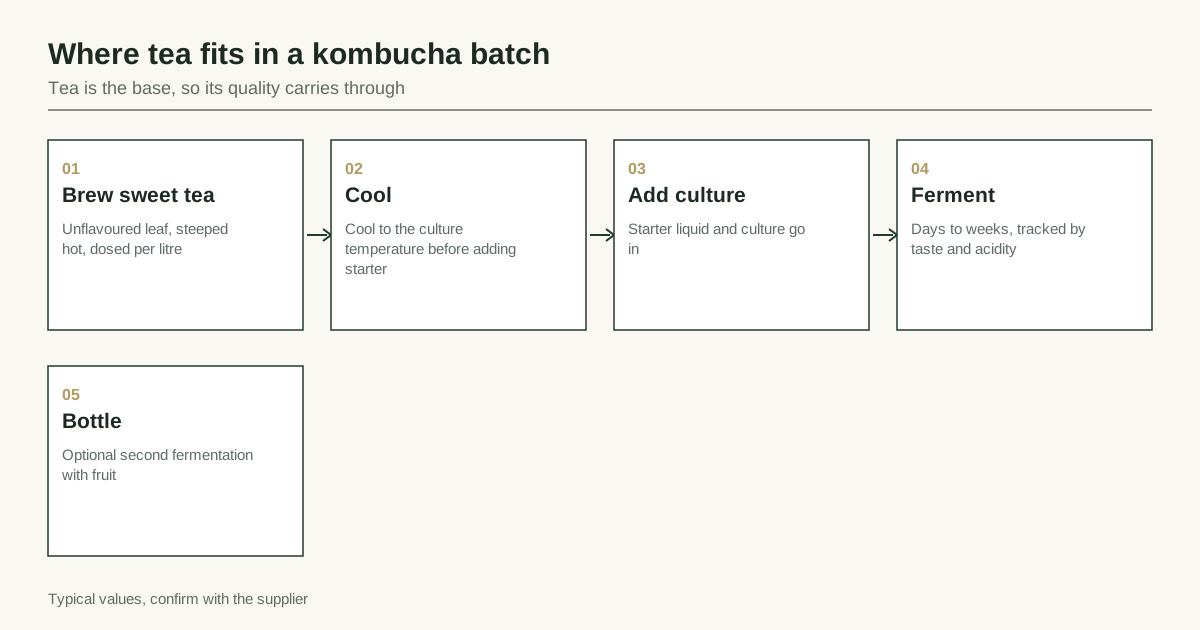
A typical batch begins with tea brewed in hot water, with sugar dissolved in it. After the liquid cools, a starter of previously fermented kombucha and a culture of bacteria and yeast are added. The mix ferments for days to weeks, during which the culture turns sugar into acids and a small amount of alcohol and gas. The result is then bottled, sometimes with a second fermentation using fruit or other flavors.
The tea provides the base flavor and some compounds the culture uses. Because fermentation changes the taste, many brewers think tea quality matters less than it does in a cup of plain tea. In practice, faults in the tea still carry through, and a stale, smoky or dusty tea gives a stale, smoky or dusty drink.
Plain leaf, no flavor
The first rule is to use unflavored tea. Scented and flavored teas carry essential oils and flavorings, and brewers often report that these can slow or disturb fermentation and leave a harsh taste. Jasmine-scented, fruit-flavored and bergamot-oil teas are common culprits. If you want a floral or fruity drink, add the flavor in the second fermentation and control it yourself.
Ask the supplier to state in writing that the tea is plain, with no added flavor, no scent, no oil and no color. Ask them to describe the process and confirm no flavor was added at any stage.
Cut and strain
Cut size affects how the tea brews and how it strains. Tea used in large vessels is often held in bags, baskets or filters, and then removed. Very fine tea can slip through a strainer and leave sediment that clouds the drink. Very coarse leaf takes longer to extract. A medium cut, such as broken leaf, tends to give an even infusion and strains cleanly. Write a size window into the spec, with limits on dust and stalk. Use a trial batch to test your own straining equipment.
Grade and price
Tea that is priced for the premium market is not needed for most kombucha. The fermentation adds its own acid and flavor, so subtle differences between high grades fade. Many brewers use mid-range grades, such as broken leaf or standard cut leaf, and some use fannings. The key is consistency: the same grade, cut and style in every delivery, because any change shifts flavor and fermentation behavior. Our price guide explains how grade, season and compliance affect cost. Quote the same size window and the same packing to every supplier so prices can be compared.
Residues and food safety
Ask for pesticide residue results on the lot, against the limits of the market where you sell. Kombucha is a consumer product, and many brewers market it as clean and natural, so residues are both a legal and a brand risk. Some brewers also report that high residue loads can affect the culture, though evidence varies. Ask for heavy metal and microbiological results and for a foreign matter limit. Our residue limits guide covers common panels.
Because kombucha rules differ by country on alcohol content, labeling and health claims, check the rules in each market with a regulatory adviser. Tea is only part of the picture, but a clean supply chain helps.
Taste and style
Steamed green tea gives a greener, fresher, slightly grassy taste. Pan-fired green tea gives a toasty, sweeter taste. Both work in kombucha, and the choice depends on the drink you want. Test small batches with each style and compare after fermentation, not before. Taste notes at the tea stage may not predict the final flavor, so keep records of tea style and lot with each batch.
Planning volume
Brewers use tea in steady amounts, so volume planning is simple. Estimate your monthly output in liters, multiply by your tea dose per liter and add a margin. That gives a monthly tea need in kilograms. Buy in line with that need and your storage space. Bulk sacks of 25 to 50 kg are common for larger brewers, while smaller brewers may start with 5 to 10 kg cartons. Larger lots cost less per kilo, but tea loses freshness over time, so do not overstock.
| Brewer size | Typical need | Typical pack |
|---|---|---|
| Small craft | A few kilograms a month | 5 to 10 kg cartons |
| Mid-size | Tens of kilograms a month | 25 kg sacks |
| Large | Hundreds of kilograms a month | 25 to 50 kg sacks, pallets |
These are illustrations, not minimum order quantities. Each supplier sets its own MOQ.
Storage and freshness at the brewery
Tea in a brewery sits near sugar, vinegar-like fermenting liquid and cleaning chemicals, and tea absorbs smells easily. Keep sacks in a dry store, away from the brewing area and away from sanitizer, and keep them off the floor on pallets. Reseal opened sacks tightly. A sack that smells of vinegar after a few weeks has absorbed the room air, and that smell will carry into the drink. Use a first-in, first-out routine by lot number and note the lot in each batch record, so that if one batch tastes off you can look for a pattern.
Consistency across seasons
Green tea is a seasonal crop, and leaf from different flushes tastes different. A brewer that changes tea lots every few months may see changes in fermentation speed and in flavor. There are three practical ways to manage this. First, buy a full season’s volume of one lot and store it well. Second, ask the supplier to blend lots to a stable profile and to send a sealed sample with each shipment. Third, run a small side batch with every new lot before it goes into full production. Whichever route you use, write the tolerance for color, taste and soluble strength into the spec, so both sides know what counts as a change.
Cold brew and alternative methods
Some brewers extract tea cold or warm rather than hot to get a softer taste and less bitterness. Cold extraction takes hours, pulls out fewer tannins and gives a smoother base, but it needs clean equipment and fresh tea with a low microbial load, because the liquid stays at a moderate temperature for a long time before fermentation begins. If you use this route, tell the supplier, ask for tea with a low microbial count and run a pilot to confirm taste and safety. Larger cuts often suit cold extraction better because they filter out easily.
Specification checklist
- Tea type: plain green tea, no flavor, no scent.
- Style: steamed or pan-fired.
- Grade and size window, with limits on dust and stalk.
- Moisture maximum and test method.
- Residue panel and heavy metal limits for your market.
- Packing, net weight and lot number.
- Production date and shelf life.
- Certificate of analysis per lot.
Our specification guide gives a full layout.
Running a trial
Ask for samples from two or three suppliers. Brew each in the same way and ferment in parallel batches under the same conditions. Record the fermentation time, pH, flavor and clarity. Taste after the first fermentation and after the second. Choose the tea that gives the flavor you want with the cleanest result, and keep a sealed reference sample of it.
Next step
Write down the tea style, the cut, the volume and the residue standard, then send the spec through the RFQ form. We introduce up to 3 matched Vietnamese suppliers within 24 business hours, and you then agree samples and test batches directly with them. For how a brewer’s cut compares with bag and RTD cuts, see our guide to bulk green tea.
Frequently asked questions
Can any green tea be used for kombucha?
Most plain green tea works. Avoid scented teas and teas with added flavor or oils. Pick leaf that is clean, fresh and free of off-smells, since fermentation does not hide tea faults.
How much tea does a kombucha batch need?
Recipes vary. Many brewers use a few grams of tea per liter of finished drink. Run your own test batches and record the dose, then ask your supplier for the same lot profile.
Is cheaper tea fine for kombucha?
Sometimes. A lower grade such as broken leaf or fannings can work, since the fermentation changes the taste. But very low-quality tea with dust, stalk or residues can cause haze, bitterness or fermentation problems, so test before buying volume.